


Léa Cayrol: a family like any other, but a struggle that is anything but ordinary
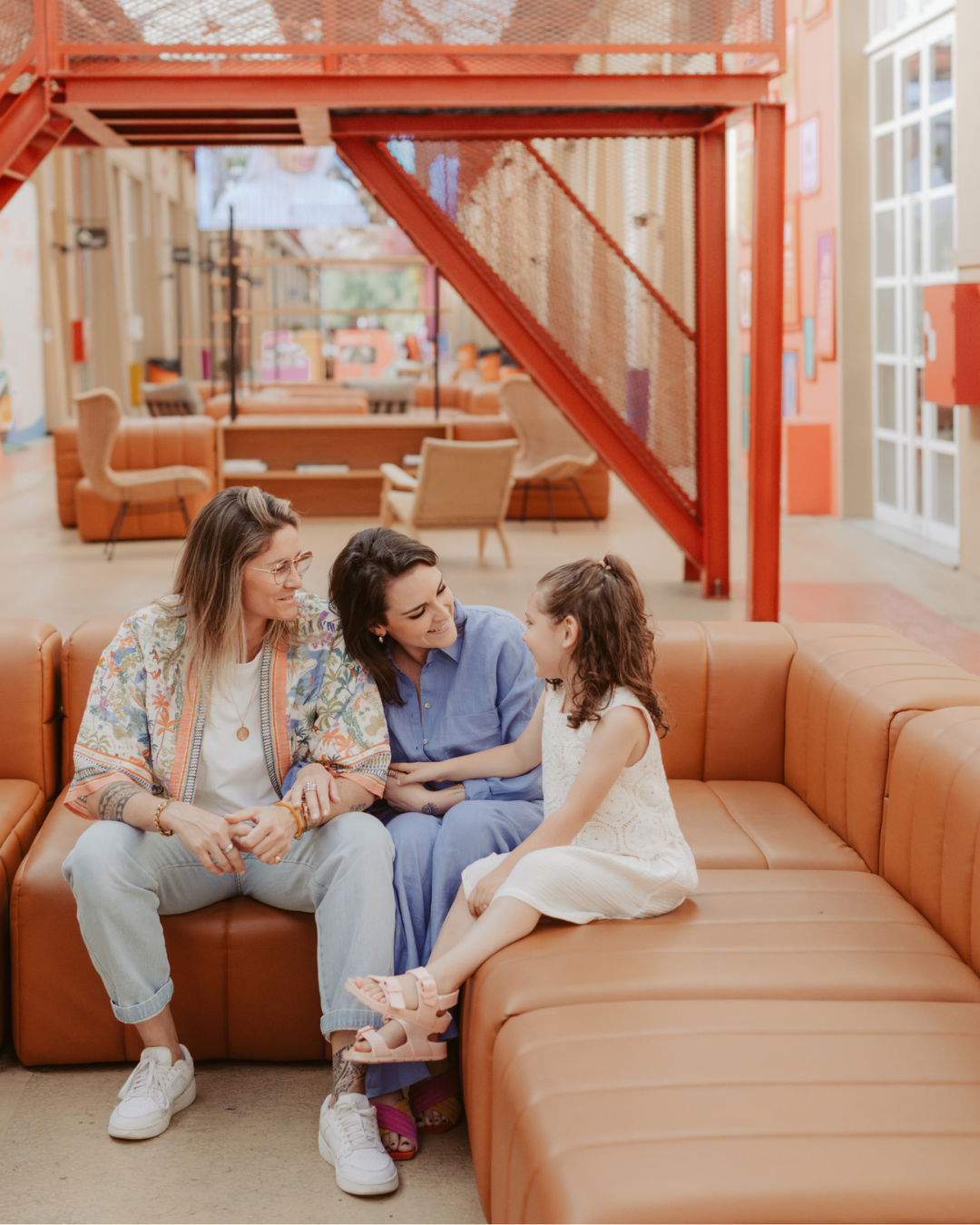
When Léa wanted to become a mom, she looked for resources that reflected who she was. She couldn't find any. So she wrote them herself.
Today, from Porto, where she lives with her wife and their daughter, she continues to create what was missing, for herself and for thousands of queer families. We wanted to sit down with her for Pride Month.
1. Could you introduce yourself in a few words? Who you are, what you do, and what led you to make this your career?
My name is Léa, and I live in Porto, Portugal, with my wife Capucine and our daughter Liv. Together, we create resources for LGBT+ families and those undergoing assisted reproductive technology (ART)—including social media content, books, a community on Substack, and our own publishing house. My next book, Familles Queer – Parentalités mode d'emploi, will be published by La Plage.
What led me here can be summed up in one sentence: I looked for this content when I needed it, I couldn't find it, so I created it.
2. What does Pride Month mean to you today? Has that changed over the years?
My relationship with Pride has evolved along with my relationship with myself. When I was younger, I didn't really identify with it—probably because I wasn't quite at peace with who I was yet.
Gradually, it became a celebration, a space to come together and feel less alone. Today it's still that, but above all, it's become a political moment that I can no longer separate from the context in which we live. The rights we've spent decades fighting for aren't guaranteed forever. Making ourselves visible is also a way of defending them.

3. You talk a lot about visibility—for queer families, for assisted reproductive technology (ART) journeys, for paths that are still too rarely seen. What made you want to take on this role?
It wasn't a deliberate choice at first—it was a response to a gap. When I was looking for resources on assisted reproductive technology (ART) for female couples, I kept coming across outdated forums or content that didn't reflect who I was, that didn't speak to our reality.
That's where the visibility came from: first to fill that void for myself, for us, and then when I realized that thousands of people were looking for exactly the same thing. And once I understood that representing a same-sex parent family helped queer people envision their own futures as much as it helped society better understand us, there was no turning back.
4. Are there things you wish you'd found (a book, content, a conversation) when you started your journey, but that simply didn't exist?
Truly inclusive books on parenting that take into account experiences beyond the heterosexual family. And resources on assisted reproductive technology (ART) that aren't automatically associated with struggle, suffering, and difficulty. Our journeys are fundamentally different from those of heterosexual couples who walk through the door of a fertility clinic—and this difference is still too rarely taken into account in the resources that are available.
5. What was it like when you decided to talk publicly about your life and your family? Was it an obvious choice, or did it require some thought?
It wasn't a conscious decision. It developed gradually, without us really choosing to "take the plunge." It was only when we realized how helpful it was to others that it became obvious. When it comes to our journey, our relationship, our family life—I realized fairly early on that staying silent was also a choice. And it wasn't the one I wanted to make.

6. How do you cope with being both a mother and a public figure on these issues? Are there times when it feels like a heavy burden?
For now, it's not a burden—and if that were to change, I'd make different choices. What helps me is never losing sight of why I'm doing this: because it's meaningful, not to perform an identity. I allow myself to be an imperfect mother despite this visibility—precisely so that others can allow themselves to be imperfect mothers too.
7. Do you feel that things are changing in France when it comes to queer visibility and same-sex parent families? In what way?
Things are changing, but rarely in a straight line. There's better representation in the media, more content, and a generation growing up with a broader view of what a family can be. And at the same time, the backlash is real: "wokism" has become a catch-all term used to reject fundamental rights, and same-sex parent families remain invisible in entire areas of daily life—at school, on administrative forms, in doctors' offices.
We're making progress. But setbacks are still too frequent for us to afford to let our guard down.
8. Is there anything you'd like people outside the community to truly understand—not just accept, but understand?
That our families are just like any other in everyday life. Our children have parents who love them, ordinary Tuesday nights, meals that don't turn out right, little scrapes and bruises to tend to. The difference is that we've had to fight for the right to exist legally—and that fight can leave its mark.
What I'd like people to truly understand is the energy it takes to have to justify your existence at every new stage of life. And that everyone—truly everyone—would benefit if this were no longer an issue.
9. What gives you hope right now?
Watching my daughter and her friends grow up. Their intelligence in navigating the world, the way they grasp topics we think are complex, their openness, their empathy. That gives me immense hope for tomorrow!

10. And finally, if you had to take away just one thing from this entire journey, both personally and professionally, what would it be?
That filling a void for yourself often fills a void for many others. I never would have imagined that talking about our experiences as mothers would become a career, let alone lead to several books, nor that it would help thousands of families build their lives in a calm, informed, and safe way.
Did you enjoy Léa's story and want to learn more? Follow her on Instagram @leacr.